

How Do I Remove Arsenic From Drinking Water in Belleair, Florida?

Introduction
Arsenic in drinking water is a serious concern that requires prompt attention and effective treatment. When homeowners in Belleair, Florida discover arsenic contamination, the most important question becomes: what removal method actually works? Arsenic is a naturally occurring element that can enter water supplies through geological formations, and it poses health risks even at concentrations that produce no taste, odor, or visible signs. Proven treatment technologies can reduce arsenic to safer levels, but choosing the right system depends on understanding your specific water chemistry, the form of arsenic present, and whether you need protection at a single tap or throughout your home.
Arsenic removal is not a one-size-fits-all decision. The treatment that works effectively in one situation may perform poorly in another, depending on factors such as pH, the presence of other dissolved minerals, and whether the arsenic exists primarily as arsenite or arsenate. Before investing in any removal system, accurate laboratory testing is needed to identify not just the concentration but also the water conditions that will determine which technology performs reliably over time.
Understanding Arsenic Contamination
Arsenic occurs in two primary forms in water: arsenite (As³⁺) and arsenate (As⁵⁺). Most treatment systems are designed to remove arsenate, which is the more common oxidized form. If water contains significant arsenite, an oxidation step may be necessary before the main removal process. This distinction matters because a system optimized for one form may not adequately address the other.
Understanding arsenic health risks and exposure helps homeowners recognize why this contaminant demands immediate attention rather than delayed action. Long-term consumption of arsenic-contaminated water has been associated with increased risks of certain cancers, cardiovascular effects, and other chronic health conditions. Because arsenic produces no warning signs in water, testing is the only way to know whether exposure is occurring.
In Belleair, arsenic contamination can originate from natural geological sources or, less commonly, from legacy agricultural or industrial activities. The U.S. Environmental Protection Agency has established a maximum contaminant level of 10 parts per billion for arsenic in public water systems, but private wells are not regulated and require homeowner-initiated testing and treatment.
Testing Your Water for Arsenic
Accurate testing is the foundation of effective arsenic removal. Using a certified laboratory rather than relying solely on home test kits provides the detailed water chemistry data needed to select appropriate treatment.
Arsenic detection and testing methods vary depending on whether you receive municipal water or draw from a private well. For well water, collect a sample according to the laboratory's specific instructions, which typically include flushing protocols and sterile containers. The analysis should report total arsenic concentration and, ideally, distinguish between arsenite and arsenate. Additional parameters such as pH, total dissolved solids, iron, manganese, and sulfate help predict how different treatment technologies will perform in specific water.
If you receive municipal water and suspect arsenic contamination, review your utility's Consumer Confidence Report first. Public systems test regularly and must notify customers if arsenic exceeds regulatory limits. However, contamination can also occur in household plumbing, particularly if older fixtures or pipes contain arsenic-bearing materials.
Arsenic Removal Technologies
Several treatment technologies can remove arsenic from drinking water, but they differ significantly in effectiveness, cost, and maintenance requirements. The most common approaches include reverse osmosis, adsorptive media, ion exchange, and oxidation-filtration systems.
Comparing comprehensive arsenic protection strategies helps homeowners understand that no single technology is universally superior. Each method has specific water-chemistry requirements and limitations. Reverse osmosis systems force water through a semipermeable membrane that rejects arsenic along with many other dissolved contaminants. Adsorptive media, such as activated alumina or iron-based media, bind arsenic to the filter surface. Ion exchange resins swap arsenic ions for other ions, though this approach works better for arsenate than arsenite. Oxidation-filtration combines an oxidizing agent with a filter medium to convert and capture arsenic.
The choice among these technologies depends on water test results, the volume of water needing treatment, and whether other contaminants require simultaneous removal. Some homeowners need only point-of-use treatment at the kitchen tap, while others require whole-house systems to protect every fixture.
Reverse Osmosis for Arsenic Removal
Reverse osmosis has become widely recommended for residential arsenic removal because it addresses both arsenite and arsenate when the system is properly designed and maintained. RO systems work by applying pressure to force water through a membrane with pores small enough to reject dissolved arsenic, along with lead, fluoride, nitrates, and many other contaminants.
Understanding arsenic removal system performance helps homeowners set realistic expectations. A well-maintained RO system can reduce arsenic significantly, but actual performance depends on membrane condition, water pressure, temperature, and the presence of competing ions. Systems designed specifically for arsenic removal often include pre-oxidation or pH adjustment to optimize membrane rejection.
Heavy metals removal with RO becomes particularly valuable when water contains arsenic plus other dissolved metals such as lead, chromium, or uranium. A single RO system can address multiple contaminants simultaneously, which often makes it more cost-effective than installing separate treatment devices for each issue.
For homeowners in Belleair considering reverse osmosis, the HydroClear™ system provides under-sink and whole-house RO options designed to remove fluoride, lead, arsenic, and other dissolved contaminants. These systems deliver crystal-clear, great-tasting drinking water while addressing the specific removal challenges posed by arsenic contamination.
When water contains both arsenic and nitrates, reverse osmosis offers a practical solution because the membrane rejects both contaminants through the same filtration process. This dual-removal capability simplifies treatment planning and reduces the number of devices needed in a home.
Pretreatment Considerations
Successful arsenic removal often depends on proper pretreatment, especially when source water contains sediment, iron, manganese, or hardness that can foul or damage the primary removal system. Sediment pretreatment requirements become critical when source water shows visible cloudiness or sediment, because particulate matter can quickly clog RO membranes or adsorptive media, reducing arsenic removal efficiency and shortening component life.
A sediment filter as the first stage before any arsenic removal system protects downstream components. If water contains iron or manganese, additional oxidation and filtration may be necessary to prevent these metals from coating the arsenic removal media or membrane. High hardness can also reduce the effectiveness of some arsenic removal technologies, particularly ion exchange and certain adsorptive media.
Water softening may be appropriate before arsenic treatment when hardness is elevated, but this decision should be based on complete water analysis and the specific removal technology selected. Some RO systems include built-in scale inhibitors or are designed to handle moderately hard water without separate softening.
Choosing the Right System
Matching filtration technology to test results ensures the system installed actually addresses measured contamination levels and water conditions. Filtration selection after testing should account for arsenic concentration, water chemistry, daily water usage, and whether point-of-use or whole-house protection is needed.
For many Belleair homeowners, a point-of-use RO system installed under the kitchen sink provides a practical and cost-effective arsenic removal solution. These systems treat water at a single tap, typically producing purified water for drinking, cooking, and ice making. Installation is straightforward, operating costs are modest, and maintenance involves periodic filter and membrane replacement.
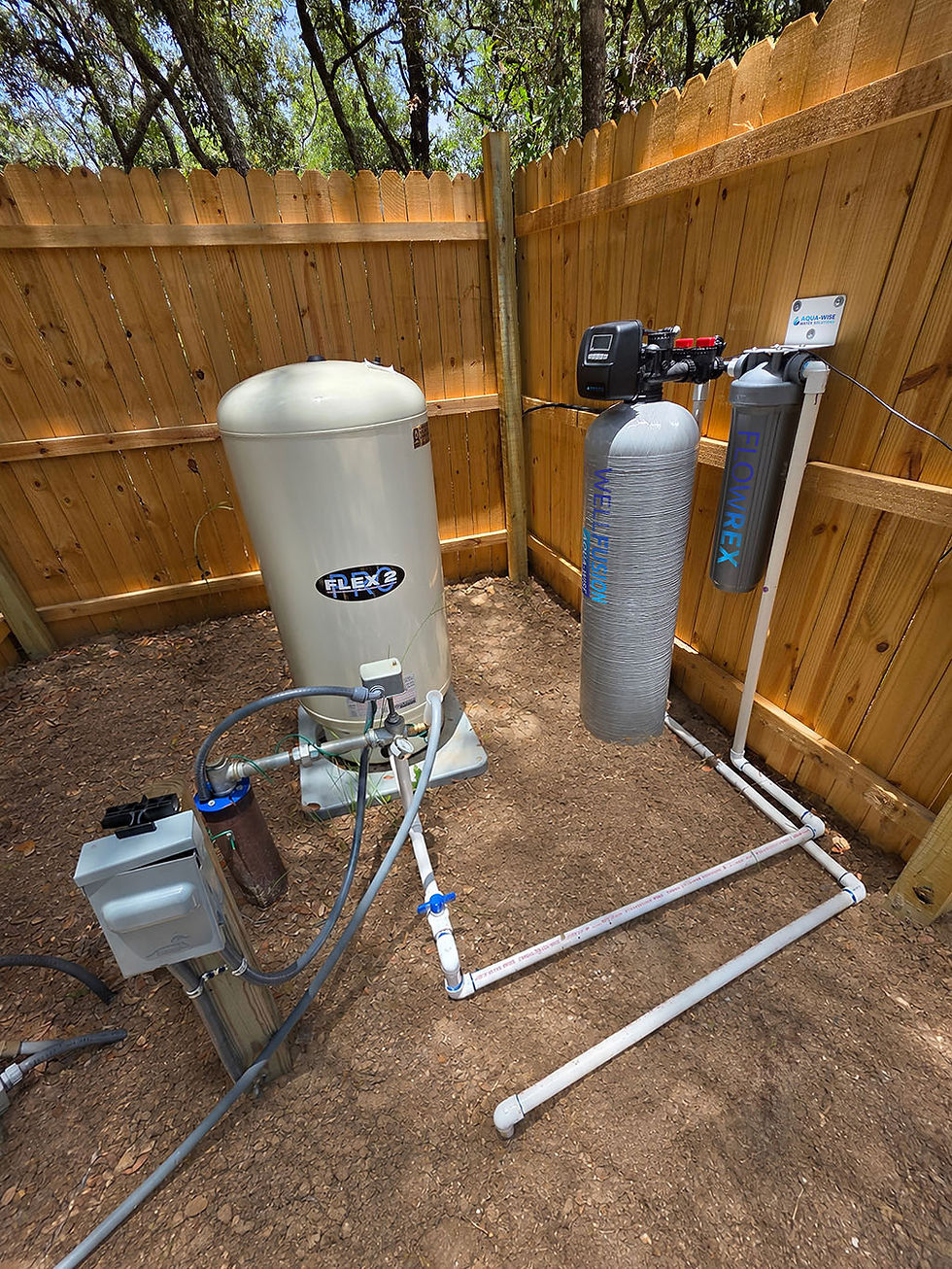
Whole-house arsenic removal becomes necessary when contamination affects water used for bathing, laundry, or other household purposes, or when comprehensive protection at every tap is desired. Whole-house systems require larger capacities, more robust pretreatment, and higher initial investment, but they eliminate the need to remember which taps are safe.
When selecting a system, verify that it is designed specifically for arsenic removal and, if possible, certified to NSF/ANSI standards for arsenic reduction. Review the manufacturer's specifications for flow rate, recovery ratio, and expected membrane or media life. Ask about warranty coverage and the availability of replacement components.
Installation and Maintenance
Proper installation and ongoing maintenance are essential to sustained arsenic removal performance. While some homeowners with plumbing experience can install under-sink RO systems themselves, professional installation ensures correct configuration, adequate water pressure, proper drain connection, and initial system testing.
RO membranes and filters have finite lifespans that depend on water quality and usage volume. Sediment and carbon pre-filters typically require replacement based on manufacturer guidelines, while the RO membrane lifespan varies with operating conditions. Adsorptive media systems need periodic media replacement or regeneration based on the volume of water treated and the arsenic concentration.
Establishing a maintenance schedule based on the manufacturer's guidelines and retesting treated water periodically confirms continued arsenic removal. A sudden decline in water production, changes in taste, or visible sediment in filtered water can signal the need for maintenance.
Keeping records of installation date, maintenance performed, and test results helps track system performance and plan for component replacement before removal efficiency declines.
Frequently Asked Questions
How effective is reverse osmosis at removing arsenic?
Reverse osmosis systems designed for arsenic removal can reduce both arsenite and arsenate when properly maintained. Actual performance depends on membrane condition, water pressure, temperature, and competing contaminants. Regular testing of treated water confirms continued effectiveness and helps determine when maintenance or component replacement is needed.
Do I need a whole-house system or point-of-use?
Many homeowners achieve adequate protection with a point-of-use RO system at the kitchen tap, treating water for drinking and cooking. Whole-house systems are appropriate when arsenic contamination affects bathing or laundry water, or when protection at every fixture throughout the home is desired. The decision depends on test results, water usage patterns, and household needs.
What pretreatment does an arsenic removal system need?
Sediment filtration is typically the minimum pretreatment required to protect RO membranes and adsorptive media from particulate fouling. If water contains iron, manganese, or high hardness, additional oxidation, filtration, or softening may be necessary to maintain arsenic removal efficiency and extend component life. Specific pretreatment requirements depend on complete water analysis.
How often should I replace RO membranes?
RO membrane lifespan depends on water quality, usage volume, and pretreatment effectiveness. Consult manufacturer guidelines for replacement schedules. Replace pre-filters according to manufacturer recommendations and monitor system performance for signs of declining flow or removal efficiency that indicate earlier membrane replacement may be needed.
Can I install an arsenic removal system myself?
Homeowners with plumbing experience can install under-sink RO systems by following manufacturer instructions carefully. Professional installation ensures correct water pressure, proper drain connection, and initial performance testing. Whole-house systems typically require professional installation due to complexity, flow requirements, and integration with existing plumbing.


Comments