
What Contaminants Does Reverse Osmosis Remove in Tarpon Springs, Florida?

Introduction: Safe Drinking Water Through Reverse Osmosis
Homeowners in Tarpon Springs often ask which contaminants reverse osmosis actually removes from their drinking water. The answer depends on your water source, the specific system design, and what testing reveals about your supply. Reverse osmosis is a physical separation process that forces water through a semipermeable membrane, rejecting dissolved substances while allowing water molecules to pass. Understanding what RO removes—and what it doesn't—helps you decide whether this technology matches your water-quality goals.
Every installation should begin with testing. Without knowing what's in your water, recommending any treatment is guesswork. A free water quality analysis establishes baseline chemistry so you can select the right system and any necessary pretreatment. The membrane does the primary work, but sediment and carbon pre-filters protect it and address contaminants the membrane alone cannot handle.
Understanding What's in Your Water
Before discussing removal capabilities, you need to know what you're removing. Municipal water in Tarpon Springs comes treated and monitored, but homeowners sometimes want additional reduction of treatment chemicals or dissolved minerals. Well owners face a different set of challenges, since private wells are not regulated and water chemistry varies widely depending on aquifer depth, geology, and nearby land use.
Common well water problems include hardness, iron, sulfur odor, and elevated total dissolved solids. Some of these issues require treatment before water reaches the RO membrane; others are precisely what RO is designed to address. Annual well water testing helps you track changes over time and verify that your treatment system continues to perform as intended. For a private well, CDC recommends testing at least annually for total coliform bacteria, nitrates, total dissolved solids, and pH.
Local water quality problems vary across neighborhoods and subdivisions. Coastal areas sometimes see higher sodium or chloride from saltwater intrusion. Older homes may have lead or copper leaching from plumbing. Agricultural or industrial activity nearby can introduce nitrates, pesticides, or solvents. Testing identifies your specific situation rather than assuming regional averages apply to your home.
Heavy Metals and Dissolved Solids RO Removes
Reverse osmosis membranes are particularly effective at rejecting heavy metals and dissolved inorganic substances. CDC guidance lists lead among chemicals removed by RO and states that RO may also reduce arsenic and fluoride. The membrane's tight pore structure blocks ions and molecules larger than water, which includes most dissolved metals.
Lead can leach from older plumbing, solder, or fixtures. Even low concentrations are a concern, especially for children. Arsenic occurs naturally in some aquifers and is a known carcinogen at elevated levels. Arsenic filtration after testing confirms the element is present and determines whether RO alone is sufficient or if specialized media is needed for higher concentrations.
Fluoride: check the current report for the specific supply; treatment practices and measured content can change.
Municipal Water Treatment Chemicals
If your water comes from a municipal utility, it has already been treated to meet federal drinking-water standards. That treatment often includes chlorine or chloramine for disinfection, and sometimes fluoride, phosphates, or other additives. While these chemicals serve important public-health purposes, many homeowners object to the taste, odor, or long-term exposure.
Reverse osmosis reduces chlorine taste from tap water, though the carbon pre-filter typically handles most of it before water reaches the membrane. Chloramine, a more stable disinfectant used by some utilities, also responds to activated carbon contact time and RO rejection. Understanding tap water chemical safety helps you decide whether you want to reduce treatment residuals even when they meet regulatory limits.
Fluoride: check the current report for the specific supply; treatment practices and measured content can change.
Emerging Contaminants
Per- and polyfluoroalkyl substances, commonly called PFAS or forever chemicals, have become a significant concern in recent years. These synthetic compounds persist in the environment and accumulate in the body. Reverse osmosis is one of the few residential technologies capable of reducing PFAS, though removal efficiency varies by chain length, system design, and operating conditions.
If you live near an airport, military base, industrial site, or former manufacturing facility, PFOA PFOS testing service can determine whether these contaminants are present in your water. RO membranes reject the charged molecules, but you need baseline testing to know whether treatment is necessary and follow-up testing to verify performance under your actual water conditions.
Other emerging contaminants include pharmaceuticals, personal-care products, and microplastics. Research on RO removal of these substances is ongoing, but the membrane's physical barrier provides a level of protection that most other residential treatments do not.
What RO Removes vs. Other Filtration Methods
Homeowners sometimes confuse reverse osmosis with other types of filtration. A standard carbon filter removes chlorine, improves taste and odor, and reduces some organic chemicals, but it does not remove dissolved minerals or salts. Water hardness is the amount of dissolved calcium and magnesium in water. Hardness passes through carbon filters unchanged.
Water softeners remove hardness through ion exchange, replacing calcium and magnesium with sodium. They do not remove heavy metals, nitrates, or most other dissolved contaminants. Softening and RO serve different purposes, and some homes benefit from both.
RO system water quality enhancement goes beyond basic filtration by addressing dissolved solids that other methods leave behind. Sediment filters remove particulate matter according to their micron rating but have no effect on dissolved substances. Ultraviolet disinfection kills bacteria and viruses but does not remove chemicals or minerals. Chemical-free water treatment through RO means no disinfectants or salts are added to the finished water; the process is purely physical separation.
Pretreatment Requirements for Effective RO
Reverse osmosis membranes are sensitive to fouling and scaling. If your water contains iron, manganese, hardness above the membrane manufacturer's recommendation, or high levels of sediment, pretreatment protects the membrane and extends its life. Ignoring pretreatment needs leads to frequent membrane replacement, low production rates, and poor water quality.
Iron filtration pretreatment removes dissolved and particulate iron before it can oxidize and coat the membrane surface. Even trace levels of iron can cause problems over time. Manganese behaves similarly and often occurs alongside iron in well water. Sediment pre-filters catch sand, silt, and rust particles that would otherwise clog the membrane.
Hardness itself does not always require pretreatment, but very hard water can cause calcium carbonate scaling on the membrane. Some RO systems include a scale inhibitor or recommend a water softener upstream. Carbon pre-filters remove chlorine, which can damage certain membrane materials, and improve taste. Each home's water chemistry determines which pretreatment steps are necessary and which are optional.
Point-of-Use vs. Whole-House Systems
Most residential reverse osmosis systems are point-of-use units installed under the kitchen sink. They treat only the water used for drinking and cooking, which makes them and efficient. A small storage tank holds treated water so it's available on demand, and a dedicated faucet dispenses it.
Whole-house filtration installation treats all the water entering your home, including showers, laundry, and toilets. Whole-house RO is less common because it requires a much larger system, higher flow rates, and more frequent maintenance. It also produces more wastewater. Most homeowners achieve their goals with point-of-use RO for drinking water and separate treatment for hardness or sediment if needed elsewhere.
Well water quality improvement often involves a combination of treatments. If your well has iron, sulfur, and high TDS, you might use oxidation and filtration for iron and sulfur, then RO at the kitchen sink for TDS and other dissolved contaminants. Treating everything with RO would be impractical and expensive.
HydroClear™ Reverse Osmosis for Tarpon Springs Homes
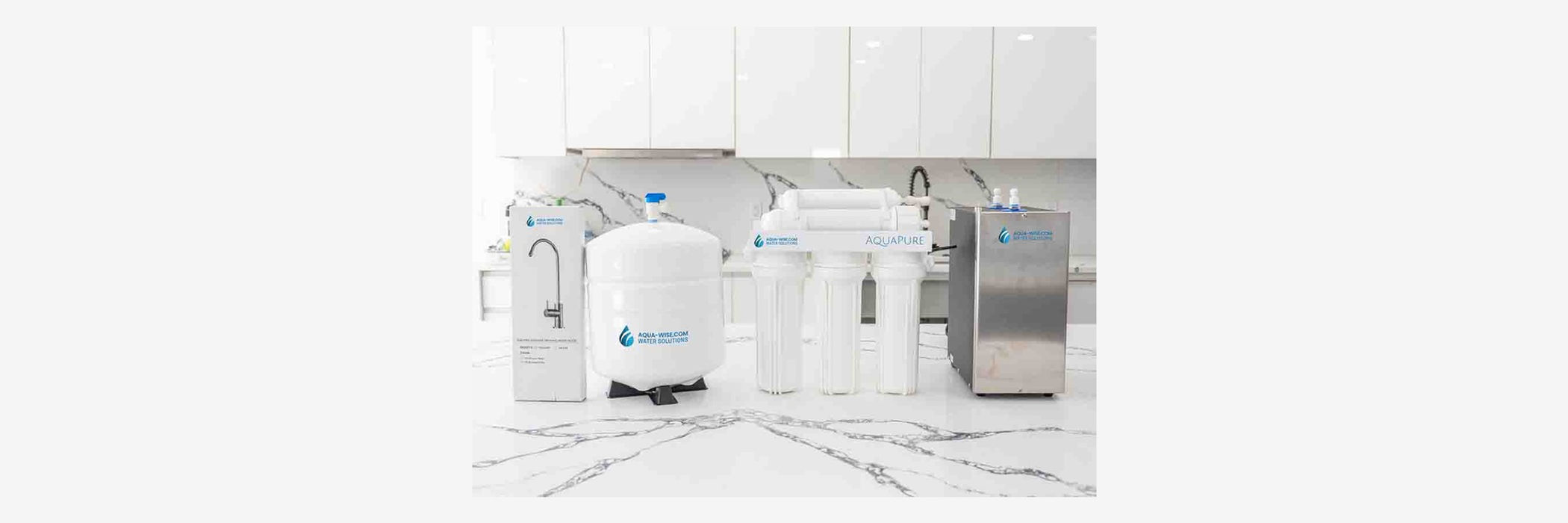
Aqua-Wise offers HydroClear™ reverse osmosis systems designed for under-sink and whole-house applications. The HydroClear™ line removes fluoride, lead, arsenic, and other dissolved contaminants, providing crystal-clear, great-tasting drinking water. These systems include the necessary pre-filters and post-filters to protect the membrane and polish the finished water.
NSF/ANSI 58 is the American National Standard for point-of-use reverse osmosis systems. When selecting a system, look for products tested to recognized standards and matched to your water chemistry. Membrane life, production rate, and waste ratio all depend on feed-water quality, so testing informs system sizing and maintenance planning.
Installation includes connecting to your cold-water line, mounting the system under the sink, installing a storage tank, and adding a dedicated faucet. A drain connection for the concentrate stream is also required. Proper installation ensures the system operates efficiently and meets your water-quality goals.
Next Steps for Tarpon Springs Homeowners
If you're concerned about what's in your drinking water, start with testing. A schedule free water test provides the data you need to make an informed decision. The results explain what each parameter means, which contaminants are present at levels that matter, and which treatment options address your specific situation.
Not every home needs reverse osmosis. Sometimes a carbon filter, a softener, or no treatment at all is the right answer. When RO is appropriate, select a system sized for your household's water use and equipped with the pretreatment your water requires. Ongoing maintenance includes replacing pre-filters and post-filters on schedule and changing the membrane when production slows or quality declines.
Reverse osmosis is a proven technology for removing a wide range of dissolved contaminants. Understanding what it removes, what it doesn't, and how it fits into a complete water-treatment plan helps you achieve safe, great-tasting drinking water in your Tarpon Springs home.
Frequently Asked Questions
Does reverse osmosis remove fluoride?
Yes, reverse osmosis membranes reduce fluoride from drinking water. Fluoride is a dissolved ion that the membrane rejects along with other minerals. If fluoride reduction is your primary goal, testing before and after installation confirms the system's performance.
Can RO remove bacteria and viruses?
Reverse osmosis membranes have pore sizes small enough to block bacteria and viruses. However, RO is not typically relied upon as the sole disinfection method. If microbial contamination is a concern, testing, addressing the source, and considering UV disinfection or other proven methods alongside RO is recommended.
Does reverse osmosis remove beneficial minerals?
Yes, RO removes most dissolved minerals, including calcium and magnesium. Some people prefer the clean taste; others add a remineralization filter to restore a small amount of minerals. Most dietary minerals come from food, not water, so the health impact of low-mineral water is generally minimal.
How often should I test my water if I have RO?
Testing your source water annually verifies the RO system is still addressing the contaminants it was installed to remove. If your water chemistry changes, you may need to adjust pretreatment or replace the membrane sooner. Testing the RO product water confirms the system is working properly.
Will RO remove the chlorine taste from my tap water?
Yes, the carbon pre-filter and the RO membrane together remove chlorine taste and odor. Most of the chlorine is adsorbed by the carbon stage before water reaches the membrane. The result is clean, neutral-tasting water free from disinfectant residuals.


Comments