

Best Sediment and Iron Filter for Well Water in Zephyrhills, Florida

Introduction
Well water in Zephyrhills often carries sediment and iron that create visible staining, clog fixtures, and leave gritty deposits throughout the home. Homeowners notice orange or rust-colored streaks on sinks, toilets, and shower walls, along with cloudy water that settles into a fine layer of sand or silt. These problems don't always mean the water is unsafe, but they do require the right filtration approach.
I work with well-water systems regularly, and one of the most common questions I hear is which treatment actually removes both sediment and iron without constant maintenance or premature failure. The answer depends on your water chemistry, iron type, and flow requirements.
What Causes Sediment and Iron in Well Water
Sediment in well water typically comes from sand, silt, clay, or other particulate matter that enters the well through the aquifer or from physical disturbances in the well structure itself. Iron occurs naturally in Florida aquifers and dissolves into groundwater as it moves through iron-bearing rock and soil.
Iron exists in two primary forms in well water.
Ferrous iron (clear-water iron): dissolved iron that appears clear when drawn but oxidizes and turns orange or rust-colored after exposure to air.
Ferric iron (red-water iron): already oxidized iron that appears as visible rust particles in the water.
Sediment and iron often occur together. Sediment can carry iron particles, and iron can bind to sediment, making treatment more complex than addressing either issue alone.
How Sediment and Iron Affect Your Home
Homeowners typically notice several problems:
Orange, red, or brown staining on plumbing fixtures, laundry, and surfaces.
Gritty texture in water or visible particles settling in containers.
Clogged faucet aerators, showerheads, and appliance screens.
Reduced water pressure from sediment buildup in pipes and fixtures.
Metallic taste or odor in drinking water.
Shortened lifespan of water heaters, dishwashers, and washing machines.
These issues are frustrating, but they also indicate that untreated water is moving through your entire plumbing system, creating long-term maintenance costs.
What Treatment Actually Works
Effective sediment and iron removal requires a system designed to handle both contaminants based on their specific characteristics in your water.
Sediment filtration uses mechanical filters rated by micron size to capture particles. A typical whole-house sediment filter removes sand, silt, rust particles, and other suspended solids down to 5,10, or 20 microns depending on the filter media.
Iron filtration depends on the type and concentration of iron present. For ferrous (dissolved) iron, the treatment process typically involves oxidation followed by filtration. Oxidation converts dissolved iron into solid particles that can then be filtered out.
Air injection or aeration systems that introduce oxygen.
Chemical oxidation using chlorine or other oxidizing agents.
Catalytic media that promotes oxidation and filtration in a single tank.
For ferric (particulate) iron, mechanical filtration can capture the particles if they are large enough, though some systems still benefit from oxidation to ensure complete removal.
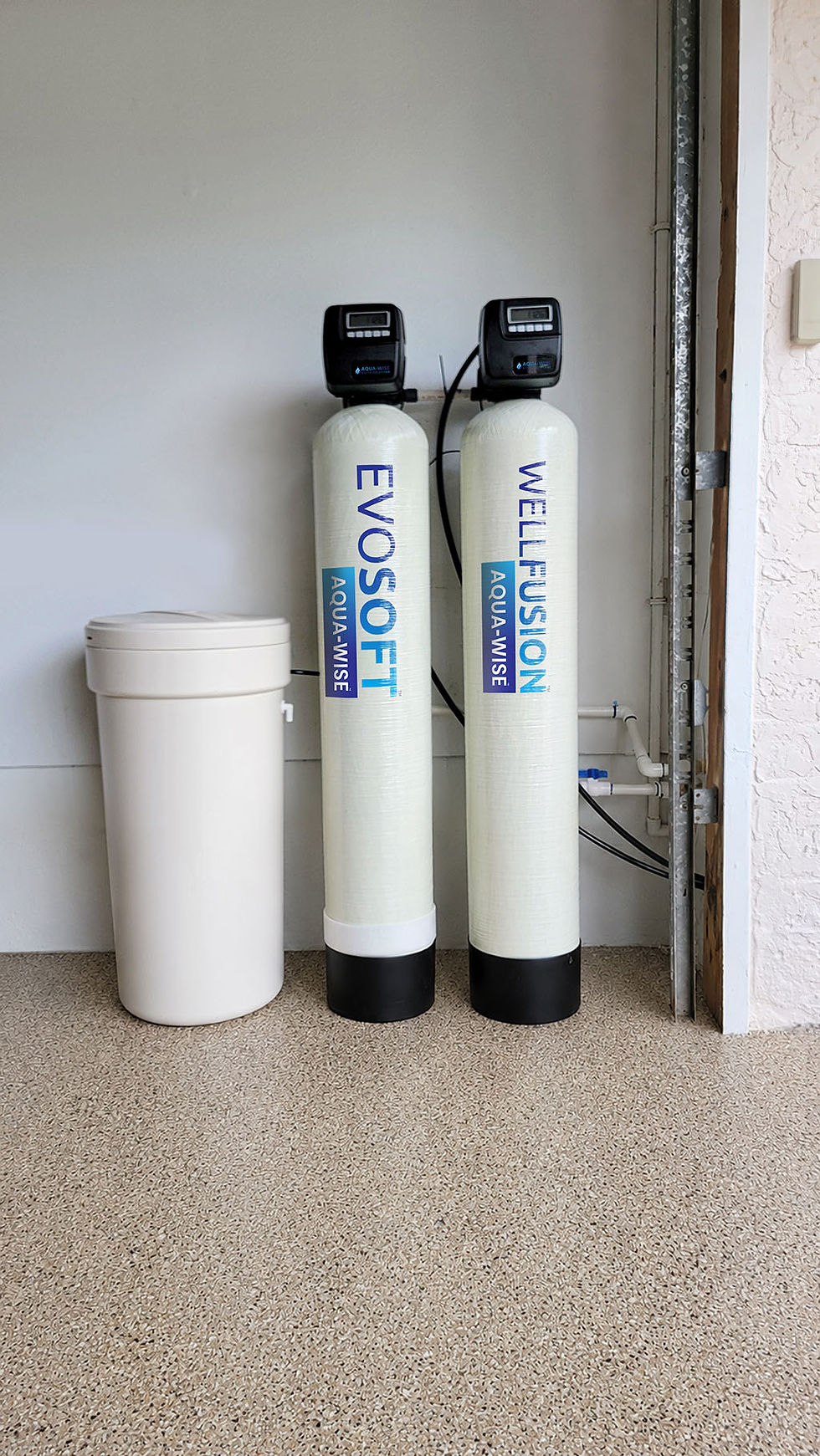
The Aqua-Wise WellFusion™ system integrates sediment and iron treatment into a whole-house solution designed for well-water conditions common in Florida. It combines multi-stage filtration with oxidation technology to address both clear-water and red-water iron along with sediment, turbidity, and other particulate matter.
What I Would Check First
Before selecting any treatment system, I recommend testing your well water to establish.
Total iron concentration: measured in parts per million or milligrams per liter.
Iron type: ferrous, ferric, or a combination.
Sediment level and particle size: helps determine the appropriate micron rating for filtration.
pH level: affects iron solubility and treatment effectiveness.
Hardness: calcium and magnesium can interfere with iron removal and may require separate softening.
Manganese: often occurs alongside iron and requires similar oxidation treatment.
Hydrogen sulfide: can complicate iron treatment and may need additional oxidation.
A complete water test provides the data needed to size the system correctly and select the right media and oxidation method. Guessing based on visible staining alone often leads to undersized systems or the wrong treatment approach.
Flow rate is another critical factor. A system must deliver enough treated water to meet your household demand during peak usage without causing pressure loss or bypassing untreated water.
I also check the well pump capacity, pressure tank size, and existing plumbing to ensure the treatment system integrates properly without creating new problems.
Choosing the Right System for Your Home
Not every sediment and iron filter is built the same. Some systems use disposable cartridge filters that require frequent replacement, leading to high ongoing costs and maintenance. Others rely on backwashing filters with catalytic media that regenerate automatically, reducing the need for constant cartridge changes.
When evaluating a system, consider:
Media type: catalytic carbon, manganese dioxide, or other oxidizing media designed for iron and sediment.
Backwash capability: automatic backwashing extends media life and maintains consistent performance.
Flow rate: the system must handle your household's peak demand without pressure loss.
Maintenance requirements: how often filters need changing, media replacement schedules, and service accessibility.
Installation footprint: available space for tanks, control valves, and drain lines.
The WellFusion™ system is designed specifically for well-water applications and addresses the combination of sediment, iron, and other common well-water issues in a single integrated platform. It uses automatic backwashing and multi-stage filtration to reduce maintenance and provide consistent water quality throughout the home.
If your water also has hardness, sulfur odor, or other concerns, those may require additional treatment stages or a different system configuration. Testing helps identify the full scope of treatment needed so you're not surprised by problems that weren't addressed.
Sediment and iron filtration is not a one-size-fits-all solution. The right system depends on your specific water chemistry, household size, and water-use patterns. Testing provides the foundation for an informed decision, and working with a water-treatment professional ensures the system is sized, installed, and maintained correctly.
If you're dealing with staining, gritty water, or clogged fixtures in Zephyrhills, the first step is understanding what's actually in your well water. From there, you can choose a treatment system that solves the problem without creating new maintenance burdens or leaving contaminants behind.
Frequently Asked Questions
What is the difference between a sediment filter and an iron filter?
A sediment filter removes particulate matter like sand, silt, and rust using mechanical filtration. An iron filter addresses dissolved or oxidized iron through oxidation and filtration, often using catalytic media. Many well-water systems need both.
Can a water softener remove iron from well water?
Water softeners can remove small amounts of ferrous iron, typically up to 3 to 5 parts per million, but they are not designed for iron removal.
How often do sediment and iron filters need maintenance?
Maintenance frequency depends on the system type and water conditions. Cartridge filters may need replacement every few months, while backwashing systems with catalytic media can operate for years with periodic media replacement and routine inspections.
Will treating iron and sediment affect my water pressure?
A properly sized system should not reduce water pressure. Undersized filters or clogged media can restrict flow, which is why correct sizing based on household demand and water chemistry is essential during system selection.
Do I need to test my well water before installing a treatment system?
Yes. Testing identifies the type and concentration of contaminants, which determines the appropriate treatment technology, system size, and media selection. Without testing, you risk installing a system that doesn't solve the problem or fails prematurely.

Comments