
Can I Safely Drink Well Water Without Boiling It in Wesley Chapel, Florida?

Introduction
If you're on well water in Wesley Chapel, Florida, you've probably wondered whether your water is safe to drink straight from the tap or if you should be boiling it first. It's a reasonable question, and the answer depends entirely on what's actually in your water.
Boiling kills bacteria and certain pathogens, but it doesn't remove chemical contaminants, dissolved minerals, or many other substances that can affect well water.
What Boiling Actually Does
Boiling water is effective at killing or inactivating most bacteria, viruses, and parasites. If your well has been contaminated by surface water, a failing septic system, or flooding, boiling can make the water microbiologically safer to drink in the short term.
But boiling does not remove:
Nitrates * Heavy metals such as lead or arsenic * Dissolved minerals like iron, manganese, or calcium * Hydrogen sulfide (sulfur odor) * Volatile organic compounds * PFAS or other persistent chemicals * Sediment or turbidity.
In fact, boiling can concentrate certain dissolved substances by evaporating water and leaving contaminants behind. If your water contains high nitrate levels, for example, boiling can make the problem worse.
How to Know Whether Your Well Water Is Safe
The only way to know whether your well water is safe to drink without boiling is to test it.
I recommend starting with a comprehensive well-water test that includes:
Total coliform and E. coli bacteria * Nitrate and nitrite * pH * Hardness * Iron and manganese * Sulfate * Total dissolved solids (TDS) * Any contaminants specific to your area or land use.
If you've never tested your well, or if it's been more than a year since your last test, that's the first step. If you've had any changes—new neighbors, construction, flooding, changes in taste or odor, or illness in the household—retest immediately.
In Wesley Chapel, well water can vary significantly depending on the depth of your well, the aquifer it draws from, and nearby land use. Testing gives you the actual data you need to make informed decisions.
When Boiling Makes Sense
Boiling is appropriate in specific situations:
Your test shows coliform or E. coli bacteria * You've been issued a boil-water notice by the health department * Your well has been flooded or physically compromised * You're waiting for a permanent disinfection system to be installed * You're addressing a temporary contamination event.
Boiling water for at least one minute (or three minutes at higher elevations) will kill most pathogens. But boiling is not a long-term solution for a contaminated well. If bacteria are present, you need to identify the source, address it, and install appropriate treatment.
What Actually Works for Well Water Treatment
Once you know what's in your water, you can choose the right treatment.
For bacteria: UV disinfection or chlorination systems provide continuous protection without the need to boil. A properly sized UV system installed after filtration can inactivate bacteria and viruses as water flows through your home.
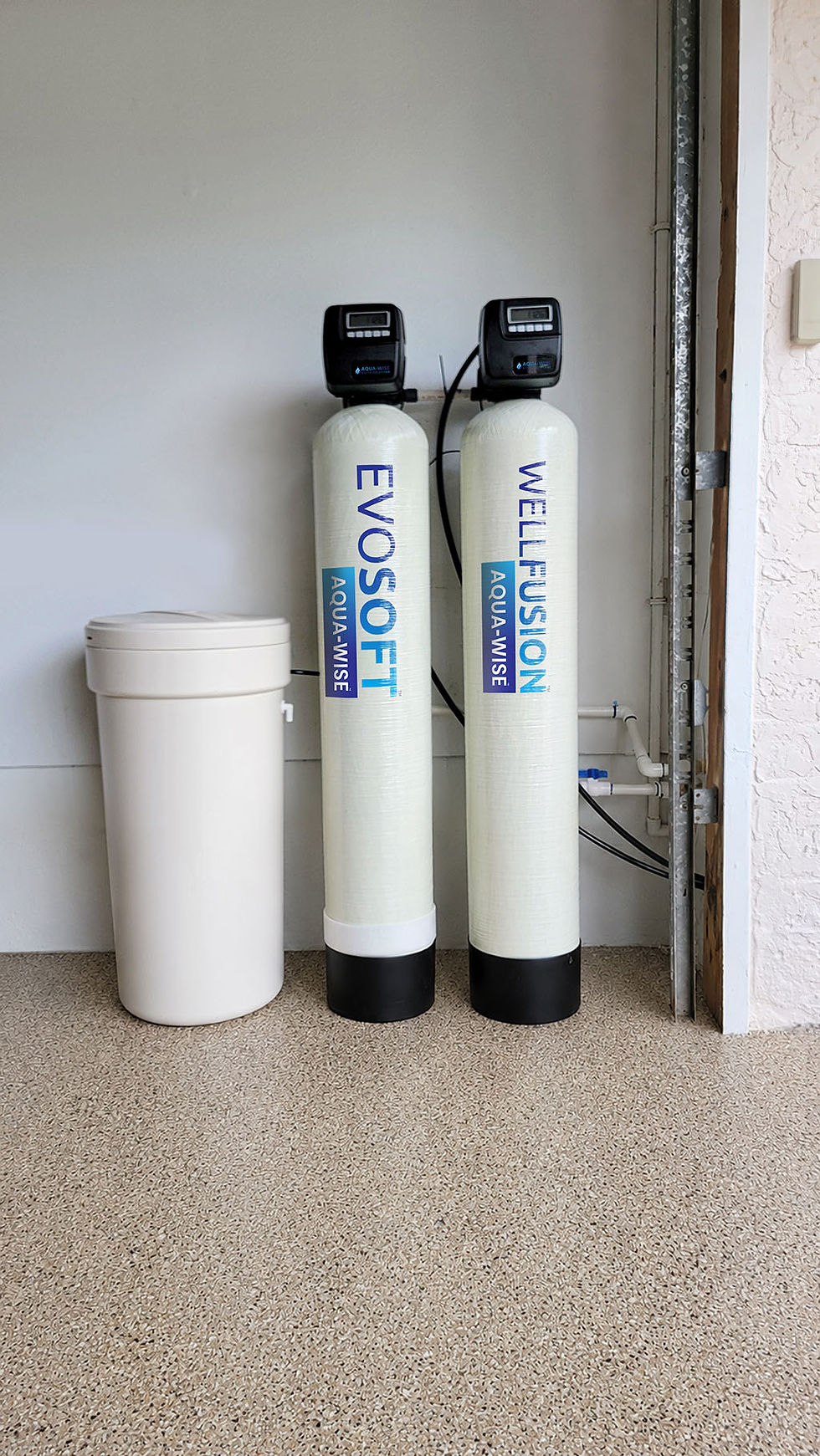
For sediment, iron, and manganese: A whole-house filtration system such as the WellFusion™ can address particulate matter and oxidize dissolved metals before they reach your fixtures or drinking water.
For chemical contaminants: Reverse osmosis at the point of use is effective for reducing nitrates, heavy metals, PFAS, and many other dissolved substances. RO systems treat water at the tap where you drink and cook, providing an additional barrier of protection.
For hydrogen sulfide: Catalytic carbon filtration, aeration, or oxidation systems can remove sulfur odor and prevent the rotten-egg smell that many well owners experience.
The right system depends on your water chemistry, flow rate, household size, and the specific problems you're solving. Treatment should always be based on testing, not assumptions.
What I Would Check First
If you're currently boiling your well water or wondering whether you should, here's what I'd do.
Get a certified laboratory analysis that includes bacteria, nitrates, and common well-water contaminants.
Compare them to EPA drinking-water standards and secondary guidelines.
Identify the actual problem. Is it bacteria? Nitrates? Iron? Something else?
Install the right treatment for the right contaminant. Don't install a water softener if your issue is bacteria. Don't rely on boiling if your problem is chemical.
Retest after installation. Confirm that your system is working as intended.
If your test shows bacteria, work with a professional to locate the contamination source. It could be a cracked well casing, a failing seal, surface water intrusion, or a nearby septic system. Treating the symptom without addressing the cause will leave you boiling water indefinitely.
Moving Beyond Boiling
Boiling well water is a temporary measure, not a water-treatment strategy. It's useful in emergencies and during short-term contamination events, but it's not a substitute for understanding your water and installing the right treatment.
If you're on well water in Wesley Chapel, the best thing you can do is test your water, review the results with someone who understands well-water treatment, and install a system that addresses your specific issues. That might include UV disinfection, whole-house filtration, point-of-use reverse osmosis, or a combination of technologies.
Once the right treatment is in place and verified by follow-up testing, you'll have confidence in your water—without the need to boil every drop.
Frequently Asked Questions
Is well water safe to drink without boiling?
It depends on what's in your water. If testing shows no bacteria or harmful contaminants, and your well is properly constructed and maintained, it may be safe to drink without boiling. Testing is the only way to know.
What does boiling well water remove?
Boiling kills bacteria, viruses, and parasites. It does not remove nitrates, heavy metals, dissolved minerals, chemicals, or sediment. For those contaminants, you need filtration or other treatment methods.
How do I know if my well water has bacteria?
The only reliable way is to test for coliform bacteria and E. coli using a certified laboratory. You cannot determine bacterial contamination by taste, smell, or appearance.
Can a water filter replace boiling?
Depends on the filter. A UV disinfection system can inactivate bacteria and viruses. A reverse osmosis system can reduce many chemical contaminants. Sediment and carbon filters alone do not disinfect water.
How often should I test my well water?
Test annually at minimum, and any time you notice changes in taste, odor, color, or clarity. Also test after flooding, nearby construction, or if anyone in your household experiences unexplained illness.

Comments