
How to Sanitize a Private Well in Westchase, Florida

Introduction
If you own a private well in Westchase, Florida, you'll eventually need to disinfect it. Whether you've just drilled a new well, completed repairs, noticed changes in water quality, or received a positive bacteria test, well sanitizing is a straightforward but important procedure that protects your household water supply.
As a Certified Water Specialist working with well owners throughout the area, I walk homeowners through this process regularly. Done correctly, sanitizing eliminates bacteria and restores confidence in your water. Done incorrectly or skipped entirely, contamination can persist and create ongoing problems.
This guide explains when sanitizing is necessary, how the process works, and what to expect afterward.
When You Need to Sanitize Your Well
Well sanitizing isn't routine maintenance you perform on a schedule like changing an air filter. It's a targeted response to specific situations.
You should sanitize your well:
After new well construction or any time the well casing is opened - Following pump replacement, repair work, or plumbing modifications - When a bacteria test comes back positive for total coliform or E. coli - After flooding or surface water intrusion near the wellhead - When you notice sudden changes in taste, odor, or appearance that suggest contamination - Before moving into a home with a private well that hasn't been tested recently.
In Westchase, heavy rain events and the water table characteristics mean surface contamination can occasionally affect private wells, especially older installations or those without proper wellhead protection. Testing first confirms whether sanitizing is actually needed.
How Well Sanitizing Works
Sanitizing a well uses chlorine to disinfect the well casing, pump, pressure tank, and distribution system. The process introduces a concentrated chlorine solution into the well, circulates it throughout the plumbing, allows contact time for disinfection, and then flushes the system clean.
Here's the general procedure:
Household bleach (unscented, 5–6% sodium hypochlorite) is commonly used. The amount depends on well depth and casing diameter. A typical residential well might require one to several gallons of bleach mixed with water.
Pour the solution directly into the well casing. Some installations allow access through a sanitary seal or cap; others require temporary removal of the well cap.
Run water through every fixture—indoor and outdoor faucets, hoses, showers, washing machine, dishwasher, and any treatment equipment. You should smell chlorine at each outlet. This ensures the entire system is disinfected.
Let the chlorinated water sit in the system for 12 to 24 hours. During this period, avoid using the water.
Run water from an outdoor hose or faucet until the chlorine odor is gone. Depending on well recovery rate and system size, flushing can take several hours. Direct the discharge away from landscaping, septic systems, and surface water.
Wait at least one week after sanitizing, then collect a new bacteria sample and send it to a certified laboratory. This confirms whether the treatment was successful.
If you're not comfortable performing the procedure yourself, a licensed well contractor or water-treatment professional can handle it. The process itself isn't complicated, but it does require attention to safety, proper chlorine handling, and correct dosing.
What Sanitizing Does Not Fix
Well sanitizing addresses bacteria, but it doesn't solve every water-quality problem.
Sanitizing will not remove:
Iron, manganese, or sulfur - Hardness minerals - Nitrates, arsenic, or other dissolved contaminants - Sediment or turbidity caused by aquifer conditions - Persistent taste or odor from organic matter or hydrogen sulfide.
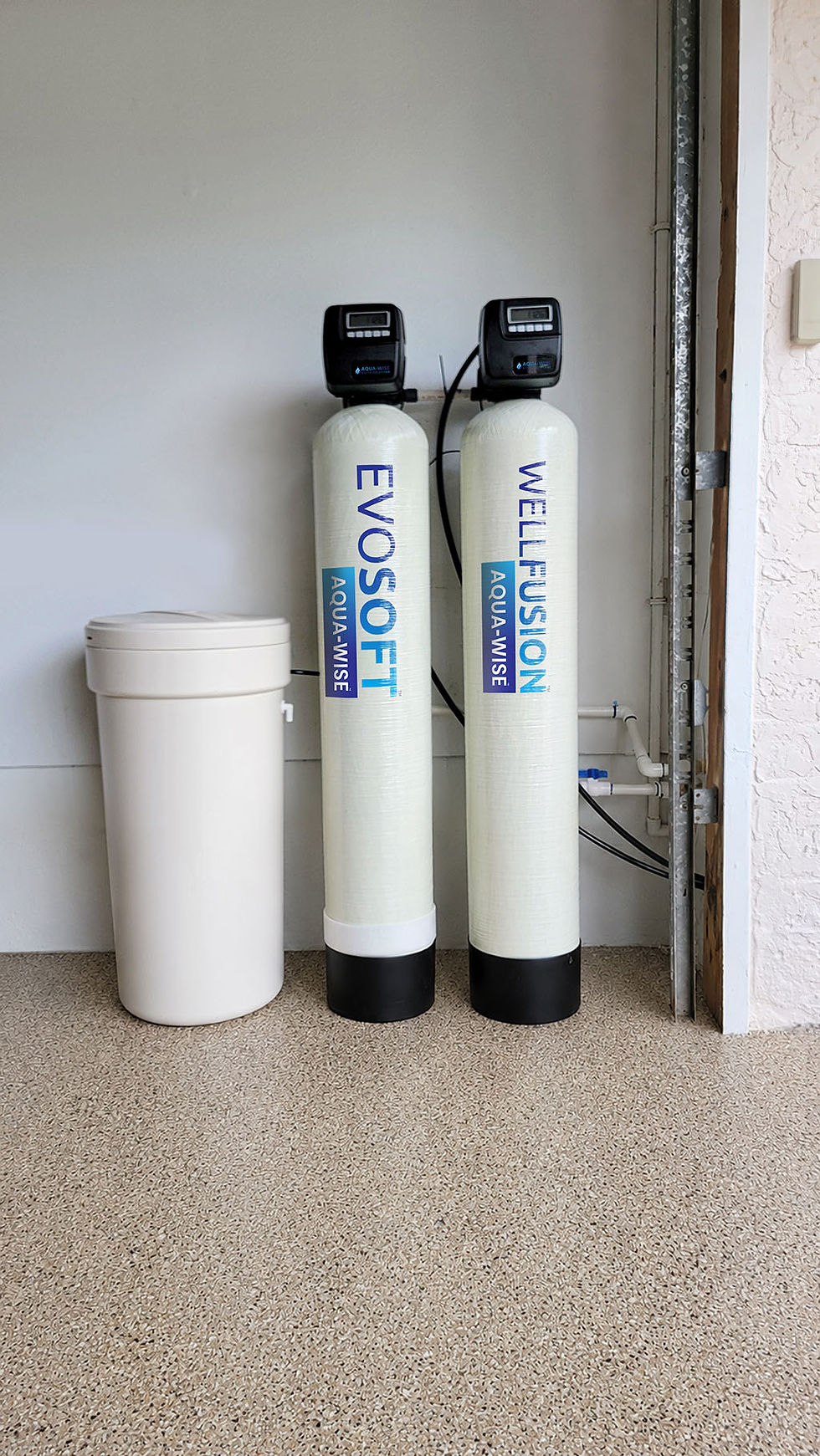
If your water test shows elevated iron, hardness, or other chemical issues alongside bacteria, you'll need a treatment system designed for those specific contaminants. A system like WellFusion™ can address multiple well-water problems simultaneously, but sanitizing the well itself is still the correct first step when bacteria are present.
Sanitizing also won't fix structural problems. If your well has a damaged casing, a failing seal, or surface water intrusion pathways, bacteria will return after sanitizing. In those cases, well repair or reconstruction may be necessary before treatment makes sense.
Why Bacteria Keep Coming Back
Sometimes homeowners sanitize their well, retest, and find bacteria again a few weeks or months later. That's frustrating, but it points to an underlying cause that sanitizing alone can't address.
Common reasons bacteria return:
Older wells or improperly sealed caps allow surface water, insects, or debris to enter.
A garden hose left submerged in a bucket, an irrigation system without backflow prevention, or other plumbing issues can introduce contamination.
Septic systems, animal waste, or stormwater runoff too close to the well can create recurring problems.
Bacteria can colonize the inside of pipes, pressure tanks, and well screens. Sanitizing may not fully eliminate biofilm without mechanical cleaning or extended contact time.
If bacteria persist after proper sanitizing and retesting, I recommend a well inspection by a licensed contractor and a review of your site conditions. In some cases, continuous disinfection using chlorination or ultraviolet (UV) treatment becomes the long-term solution.
Once your well is disinfected and tests clean, a few practical steps help keep it that way.
Maintain a sanitary well cap and inspect it periodically for damage or gaps - Keep the area around the wellhead clear of standing water, debris, and potential contamination sources - Test your water annually for bacteria, and any time you notice a change in quality - Address plumbing cross-connections and ensure backflow prevention on irrigation systems - Consider a whole-house treatment system if your water chemistry requires ongoing management.
Well water in Westchase can be excellent when properly maintained. Regular testing and prompt attention to any issues give you confidence in what you're drinking, cooking with, and using throughout your home.
Frequently Asked Questions
How long does it take to sanitize a private well?
The active work takes a few hours, but the chlorine must remain in the system for 12 to 24 hours.
Can I drink the water while sanitizing my well?
No. The water contains concentrated chlorine during the sanitizing period and should not be consumed. Plan to use bottled water or an alternative source for drinking, cooking, and food preparation during the process.
How much does well sanitizing cost?
If you do it yourself, the cost is minimal—mainly the price of household bleach.
Will sanitizing damage my water softener or filtration system?
Chlorine can affect some treatment media and components. If you have a water softener, iron filter, or carbon system, consult the manufacturer's guidelines or bypass the equipment during sanitizing.
What if my bacteria test is still positive after sanitizing?
A second positive test suggests an ongoing contamination source or incomplete disinfection. Review the sanitizing procedure, inspect the wellhead and plumbing for issues, and consider a well inspection.

Comments