
Is Well Water Safe to Drink in Pass a Grille, Florida?

Introduction
If you're a homeowner in Pass a Grille relying on well water, you've probably asked yourself whether it's safe to drink. The short answer is: it depends on what's in your water. Unlike municipal water systems that are tested and treated regularly, private well water is the homeowner's responsibility. Without testing, you simply don't know whether your water is safe or what treatment it might need.
I've worked with many well-water homeowners, and the most important thing I tell them is this: understand your water before you decide whether it's safe to drink or what treatment to install.
Well Water Is Not Automatically Safe
Well water can be perfectly safe to drink, or it can contain contaminants that pose health risks. The geology, depth, construction, and surrounding land use all influence what ends up in your well.
Common well-water issues can include:
Bacteria such as coliform or E. coli - Nitrates from fertilizers or septic systems - Heavy metals such as arsenic, lead, or manganese - Sulfur or hydrogen sulfide gas - Iron and sediment - High total dissolved solids - PFAS or other emerging contaminants.
Some of these affect only taste, odor, or appearance. Others can affect health, especially for children, pregnant women, or people with compromised immune systems. You can't tell the difference without a laboratory test.
What Homeowners Usually Notice
Many homeowners assume their well water is safe because it looks clear or tastes fine. But some of the most serious contaminants—bacteria, nitrates, arsenic—are invisible, tasteless, and odorless.
What you might notice:
Rotten-egg smell from hydrogen sulfide - Metallic taste from iron or manganese - Orange or brown staining on fixtures - Sediment or cloudiness - Salty or chemical taste.
What you won't notice without testing:
Coliform bacteria - Nitrate levels - Arsenic - Lead - PFAS.
If your water smells like sulfur, that doesn't mean it's unsafe to drink—but it also doesn't mean it is safe. Testing is the only way to know.
Testing Comes First
Before deciding whether your well water is safe or what treatment to install, you need a complete water test. I recommend starting with a comprehensive analysis that includes:
Coliform and E. coli bacteria - Nitrate and nitrite - pH and hardness - Iron, manganese, and sulfur - Total dissolved solids - Arsenic and heavy metals - Turbidity.
Depending on your location and surrounding land use, you may also want to test for PFAS, pesticides, or volatile organic compounds.
A certified laboratory test gives you the data you need to make informed decisions. If bacteria are present, you know you need disinfection. If nitrate is elevated, you know a water softener won't help. If arsenic is detected, you know you need specialized treatment.
What Treatment Actually Works
Once you understand your water chemistry, you can match the treatment to the actual problem.
Bacteria: UV disinfection or chlorination systems can eliminate coliform and E. coli. UV is effective when the water is clear and free of sediment. Chlorination works well for wells with higher turbidity or iron bacteria.
Iron and sulfur: Oxidation filtration, catalytic carbon, or aeration systems can remove iron and reduce hydrogen sulfide odor. The right choice depends on iron concentration, pH, and whether manganese or bacteria are also present.
Nitrates: Reverse osmosis or ion exchange systems can reduce nitrate at the point of use. Whole-house nitrate removal is possible but requires careful system design.
Arsenic: Reverse osmosis is one of the most reliable methods for arsenic reduction at the drinking-water tap. Whole-house arsenic treatment is also available depending on concentration and flow requirements.
Hardness and scale: A water softener addresses calcium and magnesium but does not remove bacteria, nitrates, or most other health-related contaminants.
Sediment: A sediment filter protects your plumbing and appliances and is often the first stage in a well-water treatment system.
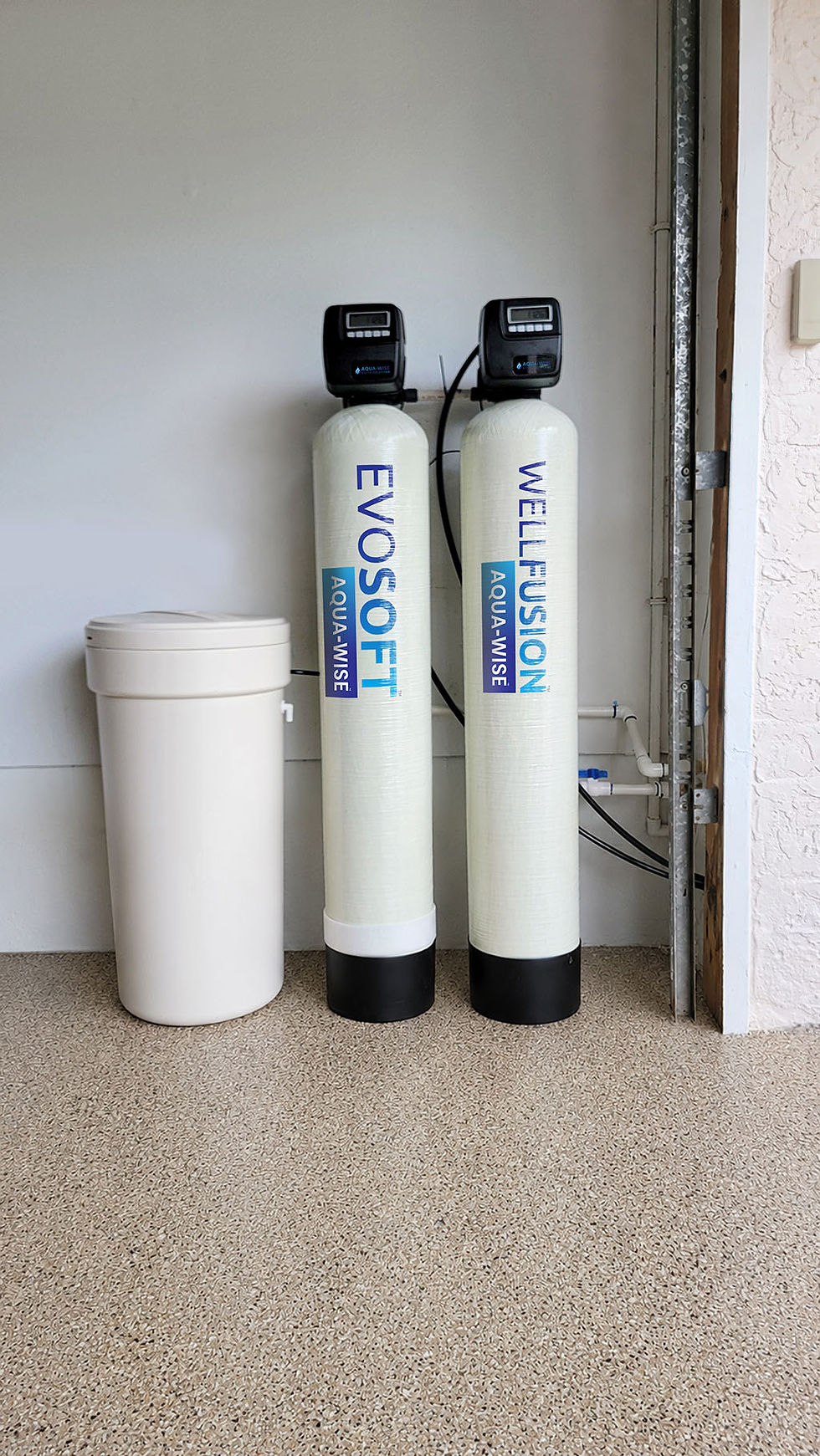
A system like WellFusion™ can integrate multiple treatment stages—sediment filtration, oxidation, carbon filtration, and optional UV—into a single whole-house platform designed specifically for well water. But the system configuration must be based on your actual water chemistry, not guesswork.
What I Would Check First
If you're wondering whether your well water is safe to drink in Pass a Grille, here's what I'd recommend.
Don't rely on appearance, taste, or assumptions. 2. Not every contaminant requires treatment, and not every treatment addresses every contaminant. 3. If you have young children, are pregnant, or have health concerns, some contaminants warrant closer attention. 4. A UV system won't remove nitrates. A water softener won't kill bacteria. Match the equipment to the problem. 5. ** Well water can change over time due to seasonal conditions, nearby land use, or well maintenance issues.
Well water can be an excellent source of drinking water when it's properly tested and treated. But without testing, you're making assumptions about something that directly affects your family's health.
Frequently Asked Questions
How often should I test my well water in Pass a Grille?
Test at least once a year for bacteria and nitrates. Test every few years for a broader panel including metals, pH, hardness, and other contaminants. Retest sooner if you notice changes in taste, odor, or appearance.
Can I drink well water that smells like sulfur?
Hydrogen sulfide gas causes a rotten-egg odor but is not usually a health concern at typical concentrations. However, odor alone doesn't tell you whether bacteria, nitrates, or other contaminants are present. Test before assuming the water is safe.
Does a water softener make well water safe to drink?
No. A water softener removes hardness minerals like calcium and magnesium but does not address bacteria, nitrates, arsenic, or most other health-related contaminants. You need testing to determine what treatment is actually required.
What is the most common well-water problem in Florida?
Hardness, iron, sulfur odor, and bacteria are all common in Florida well water. The specific issues depend on local geology, well depth, and construction. Testing is the only way to know what's in your water.
Can reverse osmosis remove bacteria from well water?
Reverse osmosis membranes can reduce bacteria at the point of use, but RO systems are not designed as primary disinfection devices. If bacteria are present, UV disinfection or chlorination should be used to treat the water before it reaches the RO system or other fixtures.

Comments