
Iron Pretreatment for Well Water Softeners in Brandon, Florida

Introduction
Many homeowners in Brandon, Florida, who rely on well water assume a water softener will solve all their water-quality problems. But when iron is present, a softener alone often creates more trouble than it solves. Iron fouls the resin bed, reduces softening capacity, and can turn fixtures orange even after the softener is installed.
Iron pretreatment removes iron before water reaches the softener, protecting the equipment and delivering the results homeowners expect. Understanding when and why pretreatment is necessary helps you avoid costly mistakes and ensures your system works as intended.
Why Iron and Water Softeners Don't Mix
Water softeners are designed to remove hardness—primarily calcium and magnesium—through ion exchange. The resin bed inside the softener exchanges sodium ions for hardness minerals, and the system regenerates periodically with salt brine to restore capacity.
Iron interferes with this process. Even small amounts of dissolved ferrous iron can coat the resin beads, a condition known as iron fouling. Once fouled, the resin loses its ability to remove hardness effectively. The softener may continue to operate, but performance declines steadily.
Oxidized ferric iron, which appears as visible rust-colored particles, causes additional problems. It can clog the resin bed, reduce flow, and pass through the softener to stain fixtures, laundry, and appliances.
Most softener manufacturers recommend pretreatment when iron exceeds 0.3 parts per million. Above that level, the risk of fouling increases significantly, and the softener's service life may be shortened.
What Iron Pretreatment Actually Does
Iron pretreatment removes iron from the water before it enters the softener. The specific method depends on the form and concentration of iron present, as well as other water-chemistry factors such as pH, dissolved oxygen, and the presence of manganese or hydrogen sulfide.
Common pretreatment approaches include:
Oxidation and filtration: Iron is oxidized from its dissolved ferrous form to its particulate ferric form, then filtered out. This can be accomplished with air injection, chemical oxidation, or catalytic media.
Catalytic filtration: Media such as manganese greensand or other catalytic materials oxidize and capture iron in a single vessel. These systems require periodic regeneration with a chemical oxidizer.
Sequestration: In some cases, iron can be chemically bound to prevent oxidation and staining, though this approach does not remove iron and is not suitable for all applications.
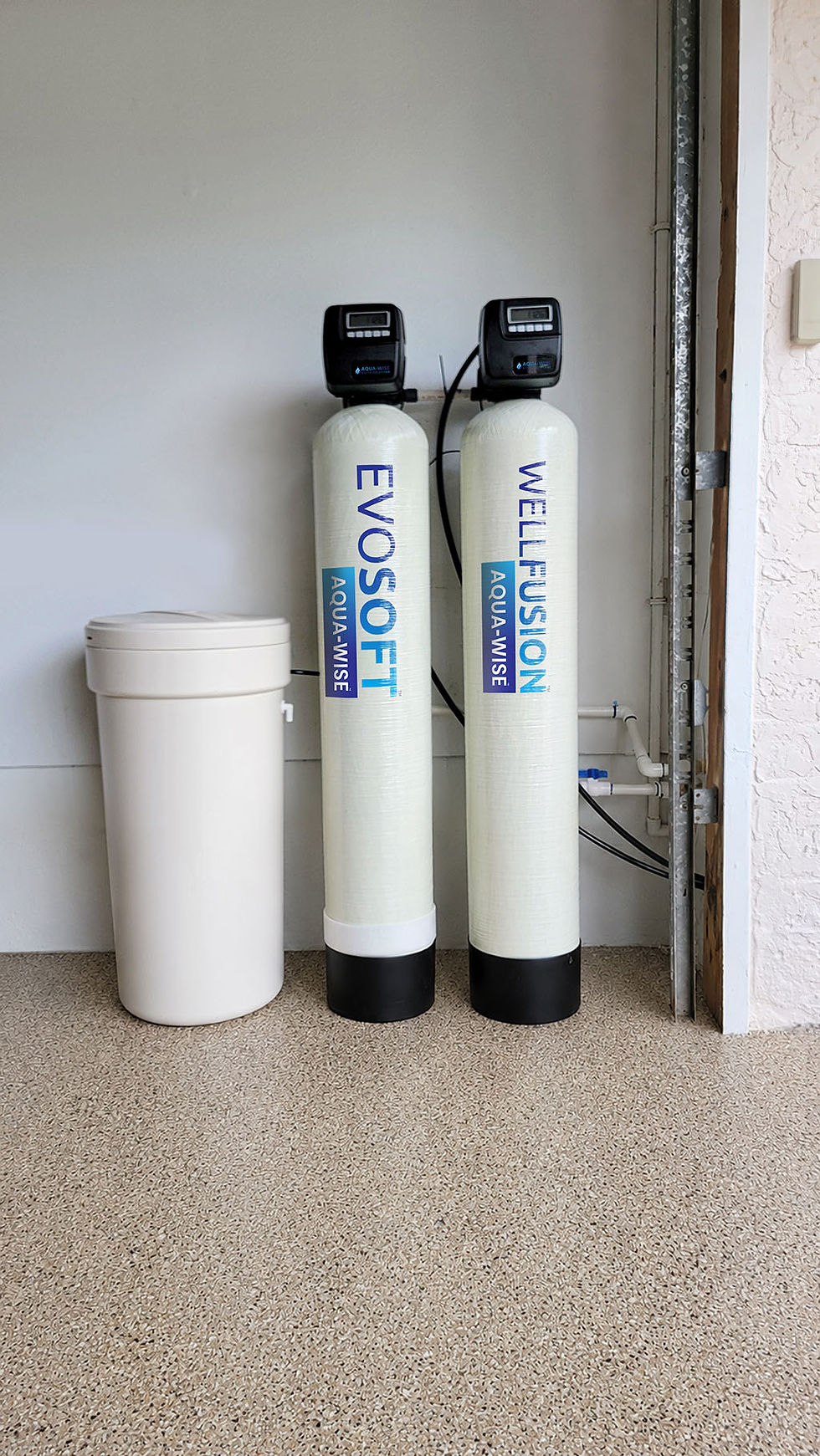
The WellFusion™ system integrates multiple treatment stages, including iron and sediment removal, to address the full range of well-water challenges before water reaches the softener or household fixtures.
How to Know Whether You Need Pretreatment
The only reliable way to determine whether iron pretreatment is necessary is through water testing. Visual clues such as rust staining, metallic taste, or discolored water suggest iron may be present, but testing reveals the actual concentration and form.
A comprehensive well-water test should measure:
Total iron - Ferrous versus ferric iron - Manganese - Hardness - pH - Hydrogen sulfide - Tannins - Total dissolved solids.
These factors interact. For example, low pH can keep iron dissolved longer, while high manganese may require similar pretreatment. Hydrogen sulfide can interfere with oxidation processes and may need to be addressed separately.
I recommend testing before purchasing any treatment equipment. A softener installed without pretreatment in iron-bearing water will underperform from the start, and repairs or resin replacement can be expensive.
Common Mistakes Homeowners Make
One frequent mistake is assuming that a water softener will remove iron simply because the marketing materials mention it. Some softeners are rated to handle low levels of iron—typically up to 1 or 2 parts per million under ideal conditions. But those ratings assume clear water, stable pH, and regular maintenance. Real-world well water rarely matches those assumptions.
Another mistake is treating iron without addressing other contaminants. If hydrogen sulfide is present, it can reduce the effectiveness of iron-removal media and create additional odor and taste problems. If manganese is present alongside iron, both must be treated, often with the same oxidation and filtration approach.
Homeowners also underestimate the importance of system sizing. An undersized pretreatment filter will clog quickly, reducing flow and requiring frequent maintenance. Proper sizing accounts for peak household demand, iron concentration, and the specific media's capacity.
What I Would Check First
If you're on well water in Brandon and considering a softener, start with a complete water test. Bring a sample to a certified laboratory or work with a water-treatment professional who can test on-site.
Review the results with someone who understands how different contaminants interact. Iron concentration alone doesn't tell the full story—pH, oxidation-reduction potential, and the presence of other metals all influence which treatment approach will work.
If iron pretreatment is needed, make sure the system is designed for your specific water chemistry and household flow requirements. A well-designed system will include sediment filtration, iron removal, and softening in the correct sequence, with appropriately sized components and accessible service points.
Don't skip maintenance. Iron-removal media requires periodic regeneration or replacement depending on the type. Softeners need salt, and prefilters need regular inspection. A system that isn't maintained will fail regardless of how well it was designed.
Frequently Asked Questions
Can a water softener remove iron without pretreatment?
Some softeners can handle very low levels of clear-water iron, typically below 1 part per million, under ideal conditions. Above that level or when water chemistry is less favorable, iron will foul the resin and reduce softener performance. Pretreatment is the reliable solution.
How do I know if my softener resin is fouled with iron?
Signs include reduced softening performance, rust-colored staining that continues after the softener is installed, and visible orange or brown discoloration in the brine tank or on the resin itself. A resin cleaner may help in mild cases, but replacement is often necessary.
What type of iron pretreatment works best for well water?
The best approach depends on your water test results. Catalytic media filters work well for moderate iron levels with stable pH. Air-injection systems are effective for higher concentrations. Sequestration is rarely appropriate for whole-house treatment. Testing determines the correct method.
Does iron pretreatment require a lot of maintenance?
Maintenance depends on the system type. Catalytic filters require periodic regeneration with a chemical oxidizer, and media may need replacement every few years. Air-injection systems need occasional inspection of the air-induction valve. Sediment prefilters should be checked and replaced regularly.
Will removing iron improve my water softener's performance?
Yes. Removing iron before the softener protects the resin from fouling, maintains full softening capacity, and extends the system's service life. It also eliminates staining and improves water clarity, taste, and overall quality throughout the home.

Comments